Robert Fayrfax
Robert Fayrfax (1464–1521) was the leading English composer of the reigns of Henry VII and Henry VIII. Born at Deeping Gate in Lincolnshire, he was a Gentleman of the Chapel Royal, the monarch’s own choir, by the late 1490s. Cambridge made him a Bachelor of Music in 1501 and a Doctor in 1504, and in 1511 he became the first Doctor of Music recorded at Oxford.
In June 1520 he led the singers of the Chapel Royal at the Field of the Cloth of Gold, the summit near Calais where Henry VIII and Francis I of France tried to outdo each other in splendor. His surviving music includes six Masses, among them O quam glorifica, Regali ex progenie and O bone Jesu, two Magnificats and about a dozen motets. Three of his works are in the Eton Choirbook.
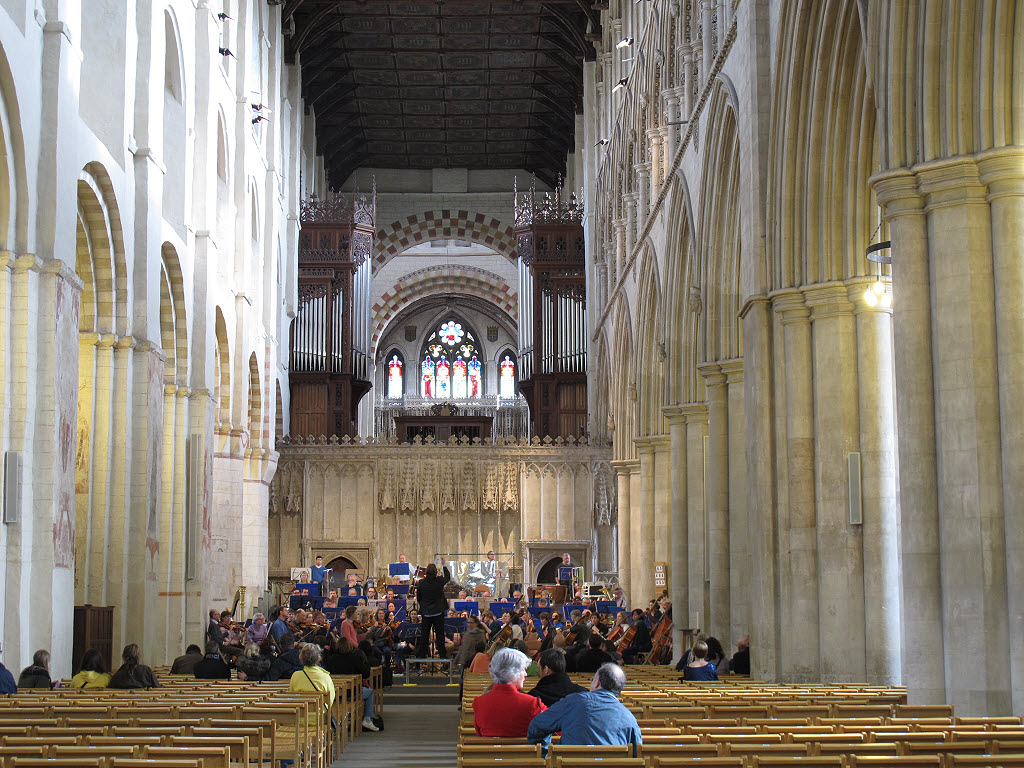
He is associated with the music of St Albans Abbey, where he was buried. A replica of his memorial brass, made in 1921, gives the date of his death as October 24, 1521.
Ars Nova and this music
Fayrfax’s coat of arms decorates the Fayrfax Manuscript, the songbook that preserves This gentil day dawes, which Ars Nova Singers sing on Darkness & Light in December 2026.
Read more
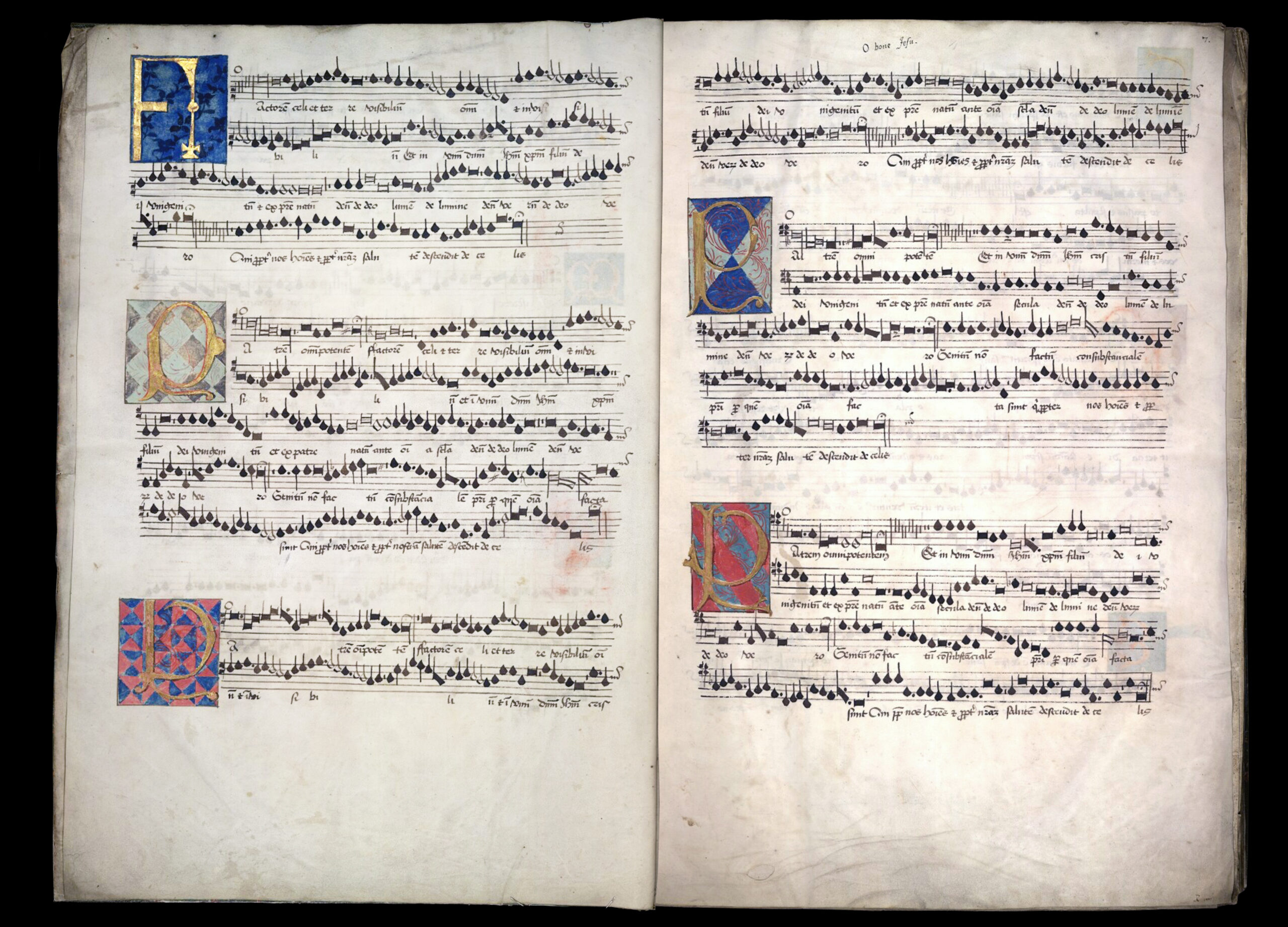
Banner image: The Credo of Fayrfax’s Missa O bone Jesu in the Caius Choirbook, Gonville and Caius College, Cambridge (public domain, via Wikimedia Commons).