
A Drop of the Sea, a Star of the Sea
How one copied letter turned a drop of water into the star sailors steer by. Four pieces on this December’s Darkness & Light greet that star across eight centuries, from Hildegard of Bingen to Trond Kverno.
How one copied letter turned a drop of water into the star sailors steer by. Four pieces on this December’s Darkness & Light greet that star across eight centuries, from Hildegard of Bingen to Trond Kverno.
The program, in order, with four specific things to listen for — and everything we have written about the works, the composers and the poets, in one place. October 9 in Boulder, October 10 in Denver and by livestream, October 11 in Longmont.
Corrado Margutti built the libretto of Rivers the way he built its music: out of many sources that do not obviously belong together. A Portuguese modernist, a Bohemian-Austrian poet in Paris, an Italian classicist, an Orkney islander, a Carmelite nun, and a novelist from Turin.
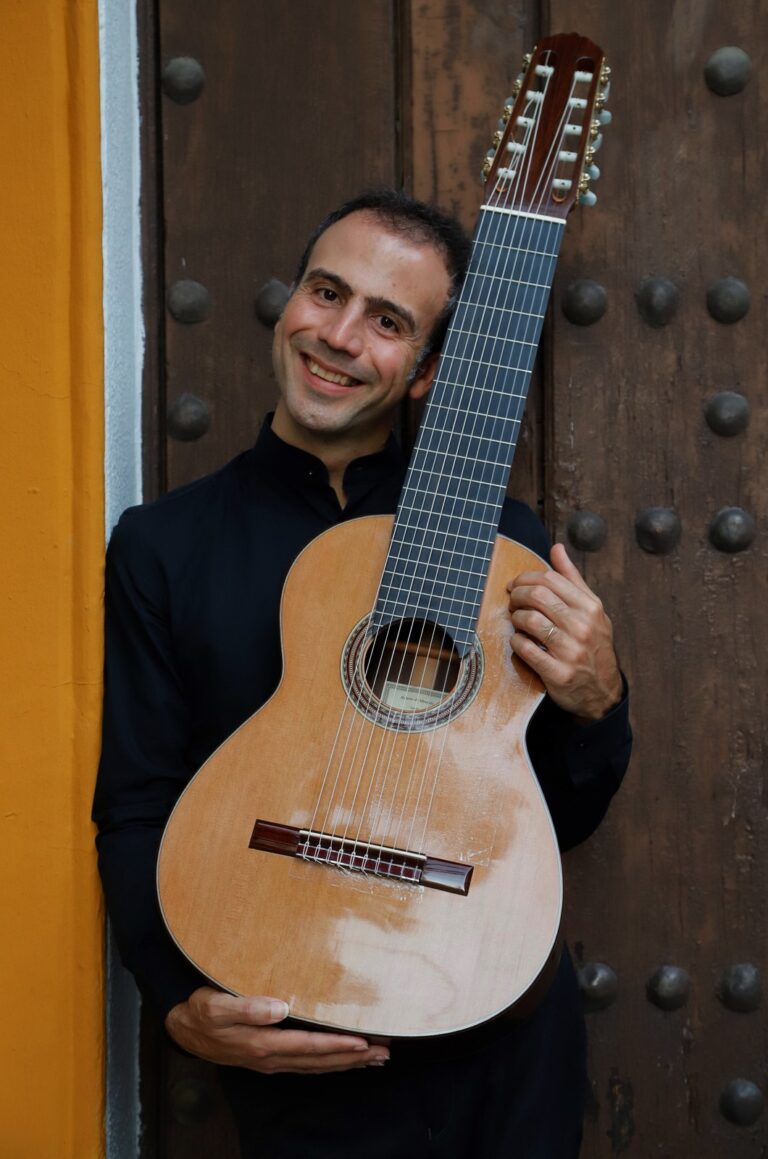
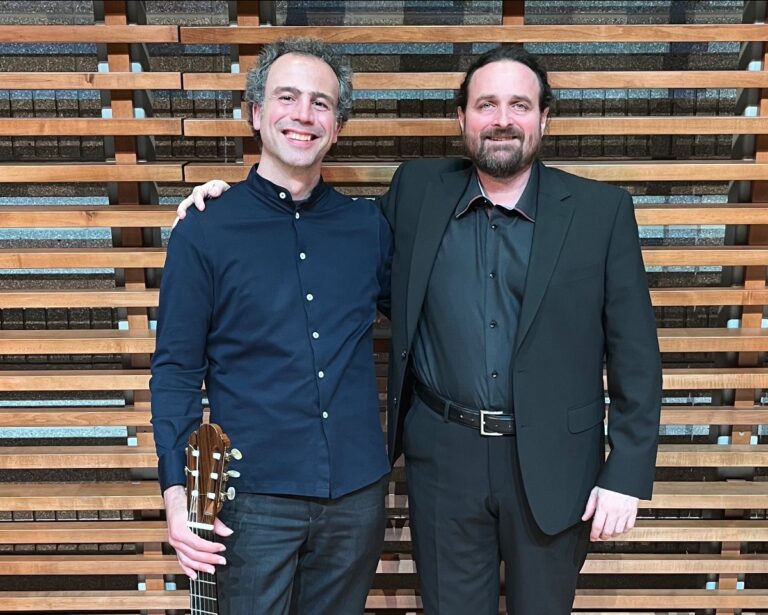
Narciso Yepes conceived the ten-string classical guitar in 1963 and had it built by José Ramírez III. Four of its strings are usually never played at all. Nicolò Spera played it at our September house concert — and explains what the extra four do: “The note shines, but there is the Milky Way around it.”
Asked what an audience should read before the concert, Nicolò Spera said come unprepared — and then named one poet. David Maria Turoldo was a Servite priest, a Resistance organiser, and a man his own church sent abroad to live among emigrants. He is almost unknown in English.
Castelnuovo-Tedesco called his piece Romancero Gitano. Lorca wrote a famous book called Romancero gitano. The seven poems in the piece are not from that book. A note on deep song, a competition in Granada in 1922, and a grave that has never been found.
Nuestras vidas son los ríos: our lives are the rivers that go down to the sea. Nicolò Spera asked Corrado Margutti for a piece about immigration, and the answer runs through Lorca, an exile’s Romancero, six languages of poetry, and a prayer for peace. Rivers and streams, and one sea.
Corrado Margutti finished Rivers in 2020 and wrote it to stand beside a piece from 1951. Then he opened it by quoting that piece. A note on the two works Ars Nova Singers performs on October 9, 10 and 11, and the music hidden inside one of them.