Meet the Guest Artist: Nicolò Spera on Rivers, Turoldo, and the Teachers Who Shaped Him
Interviewed by Kimberly Brody and Jonathan Raabe
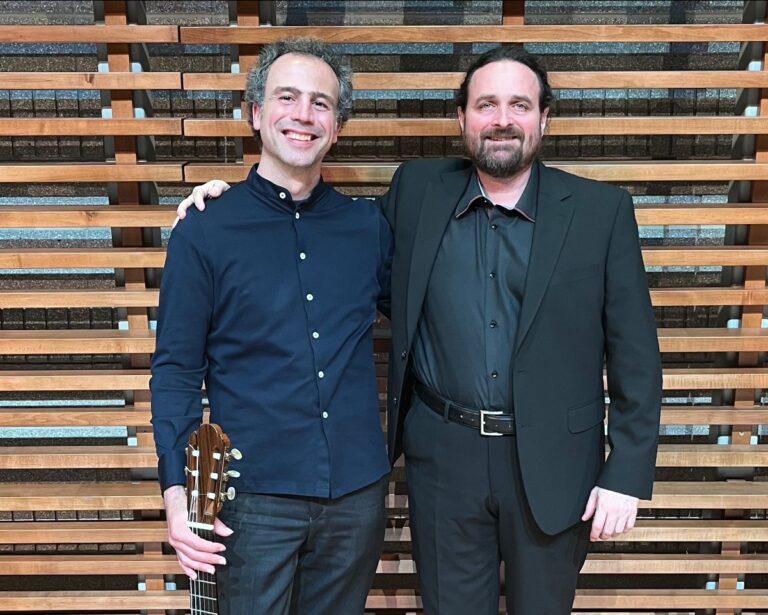
Marketing Director Jon Raabe and Executive Director Kim Brody had the pleasure of speaking with guitarist Nicolò Spera ahead of Ars Nova’s season-opening house concert recital. Nicolò is also our featured guest artist on our October 9, 10, and 11 concerts.
Key Takeaways
- Nicolò Spera opens our 41st season twice — an intimate house concert on September 12, then Rivers & Streams on October 9, 10, and 11.
- He came to the guitar at nineteen, with no musicians in his family, in a country he describes as one of the worst in the world for music education.
- Rivers, the centerpiece of the October program, is his own commission — a work by Corrado Margutti about immigration and belonging. Many rivers, one sea.
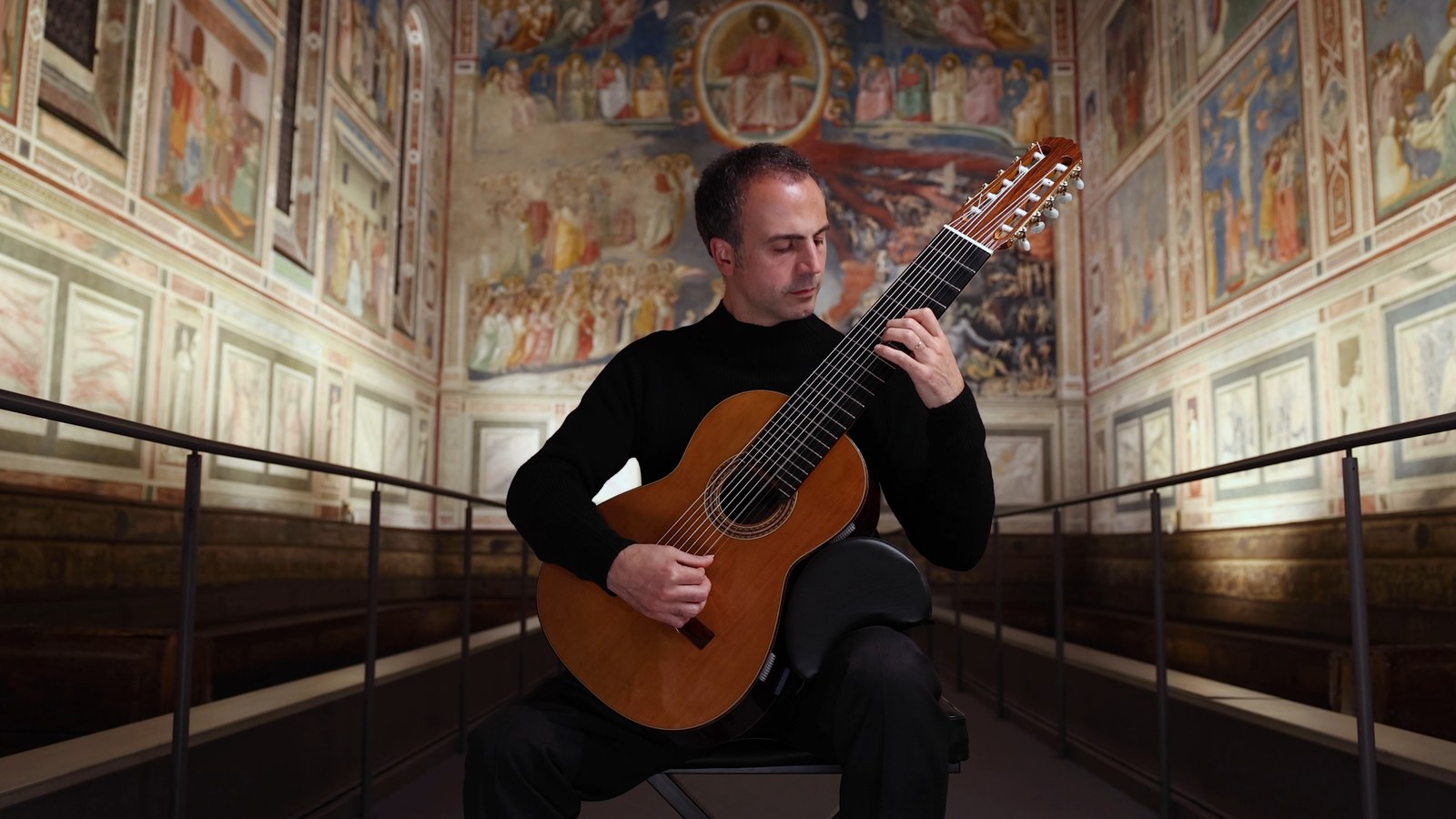
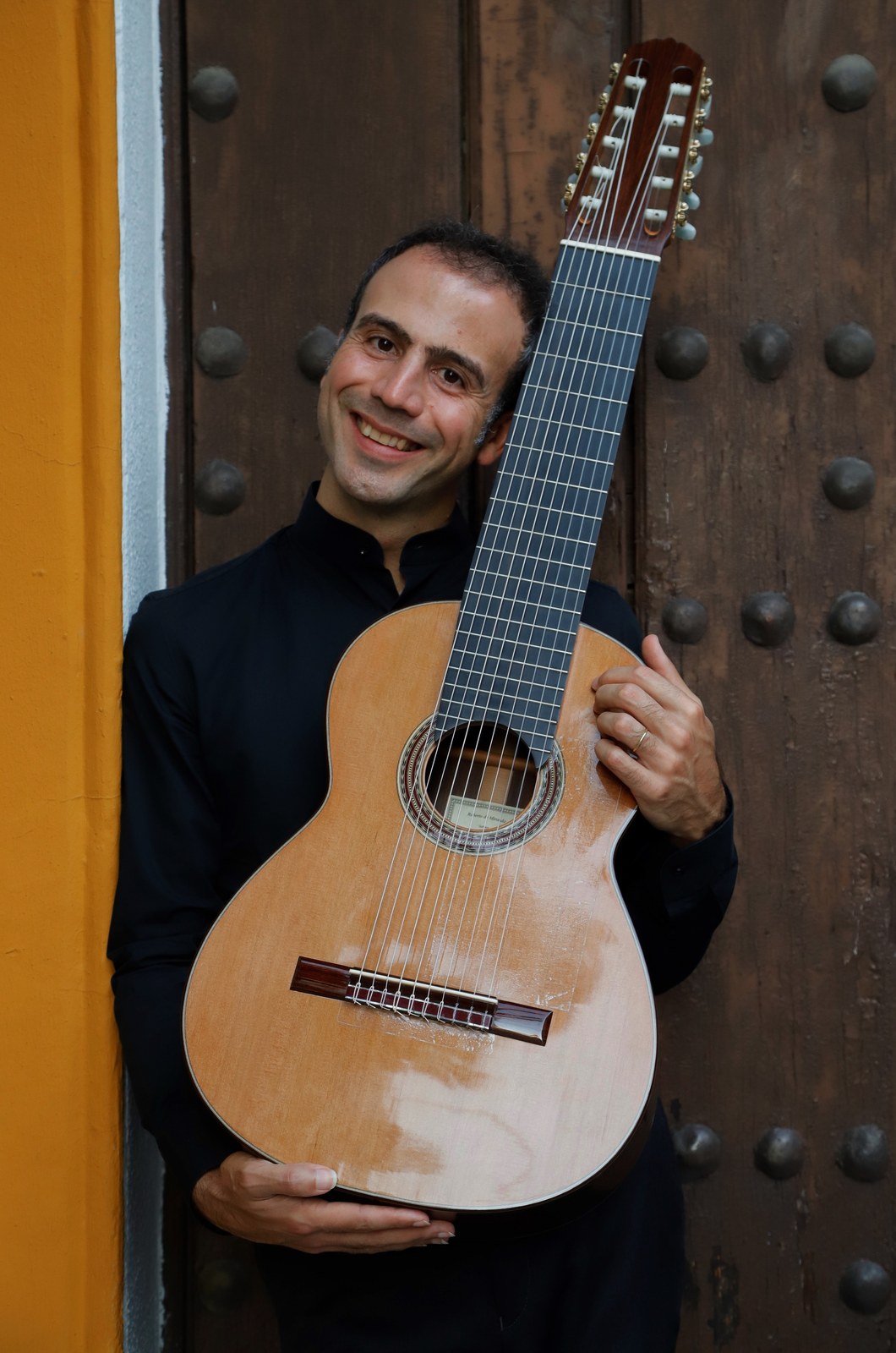
- He plays both six-string and ten-string guitars. The four extra strings on the ten-string are often never touched. They ring in sympathy: “The note shines, but there is the Milky Way around it.”
In This Article
- Growing up without music education
- The teacher he left, and the two he kept
- Why the guitar
- Commissioning Rivers
- Six strings, ten strings
- The festival, and what he misses
- Hearing him this season
Growing up without music education
Kimberly Brody: Welcome, Nicolò! We are so thrilled that you’ll be with us for the first two events of our 41st Season! We’d love for our audiences to get to know you a little bit and learn more about the music they are going to hear on these first two concerts.
We’d love to know a bit more about your life before you arrived in Colorado, and where you grew up and trained in Italy before your career brought you to Colorado. What did music education look like for you in Italy?
Nicolò Spera: Italy is one of the worst countries in the world for music education. It’s notorious for how bad it is. And it breaks my heart, but that’s the truth. I think the United Nations made a ranking when it comes to music education. And Italy is somewhere close to Laos, very close to the hundredth place in the world when it comes to music education.
There is nothing in the public schools. All we have is in middle school for one hour a week, usually spent on a horrible plastic flute. And unfortunately, the way musicians are treated is reflected by the poor music education of the general public and audience.
This is why basically Europe is divided into Northern Europe: Germany, Scandinavian countries, where they have this amazing, amazing music education system, which brings a great audience, great programming, great orchestras; and then there is Southern Europe.
In my family, no one is a musician, and for me music education happened very late. I started playing guitar, let’s say, at a more educated level only when I was 19.
KB: That is so surprising, given all the well-known Italian composers, especially in early music, with all the Baroque masters coming from Italy.
NS: Yeah, it’s fascinating because when you walk outside of Italy, people imagine that in Italy people are still working, reciting poetry, and singing operas, and no, no, it is not like that.
KB: Did you get an undergraduate degree in Italy?
NS: That’s another interesting thing. The official schools of music in Italy are conservatories. And I’m not kidding, only this year, in 2026, have conservatory degrees been officially recognized as university degrees.
So I grew up with the old system, and it is what ruined most conservatories. You had students from middle school, 10, 11-year-olds, together with 20-year-olds who wanted to make a career in music, as well as 30-year-olds who just wanted to get better, all in the same school, all with the same teachers.
So it was very inconsistent, very unpredictable what you would get out of a conservatory education. When I came to the U.S., they didn’t know what to do here with my degree, because we had no transcripts, no credits. They thought, well, you basically have a high school degree and then this diploma from a conservatory.
I came here for an artist diploma first, which is not a degree in the U.S., it’s just a certificate. And so that worked out fine. I came to the US specifically to study with Jonathan Leathwood at University of Denver, and then I auditioned at CU because at one point he was teaching at both institutions. It didn’t matter what program they put me in — I just wanted to study with Jonathan. The Graduate Dean at the time was Steve Bruns and when he heard me play — and saw an example of my writing — he put me into the DMA program.
The teacher he left, and the two he kept
KB: Is there a teacher or a moment from your early years that still shapes how you play today?
NS: My first teacher, of course, was important because I was 20. I’d been studying basically alone. And when I went to the music store in downtown Milano, next to the Duomo, I just told the guy there that I wanted to play guitar. He showed me what books to get. But then I realized I couldn’t do it on my own. But I entered a competition where this particular guitarist was judging and I thought, well, I’m going to suck, but at least I’m going to meet the guy and talk to him and ask him for lessons.
Since no one is a musician in my family, I thought, he’s a maestro, he’s at a conservatory, he writes books about music. I thought everyone was probably like Pavarotti, you know, you can’t easily reach them. But all I actually needed to do was open the phone book and call him! But I didn’t know that, so I went, played in the competition, told him what I wanted, and I started having lessons with him. Unfortunately, he was not a great teacher… but luckily, I was motivated.
After I played my first public recital, I called him to tell him how happy I was, that I really wanted to try to do this in my life. And I remember there was a silence, and then he said, “Nicolò, if you want, I will make of you a great concert artist.”
And inside myself, I thought, oh, it’s time to start looking for another teacher!
Nicolò Spera
NS: I was fortunate that I met Lorenzo Micheli, who is one of the most wonderful musicians. He changed the way I played, changed the way I thought of music, changed everything. And it’s also thanks to Lorenzo that I came to America to study with Jonathan.
Back then Lorenzo was already very famous, but he was young. He’s only four years older than me. He’s from Milan and I would just bike five minutes to his house and we would have mornings together. We would just play music, and it was just unbelievable how wonderful he is. This is the reason why Lorenzo comes here now to teach my students once every semester.
And he’s the one that said, because of different reasons, I think you should go study with Jonathan. He’s a very good friend of mine. And now Jonathan is kind of famous. Back then, he wasn’t much, but I trusted Lorenzo so much. So I applied to DU to study with Jonathan.
And Jonathan is the other teacher that I still admire, ask advice of. To me, when I think of the two greatest musicians I’ve ever met, I think of my two teachers, Lorenzo and Jonathan. I’ve never met anyone that thinks of music the way they do, that plays music the way they do, that speaks about music the way they do.
Why the guitar
KB: What drew you to the guitar specifically? What made you want to play this instrument?
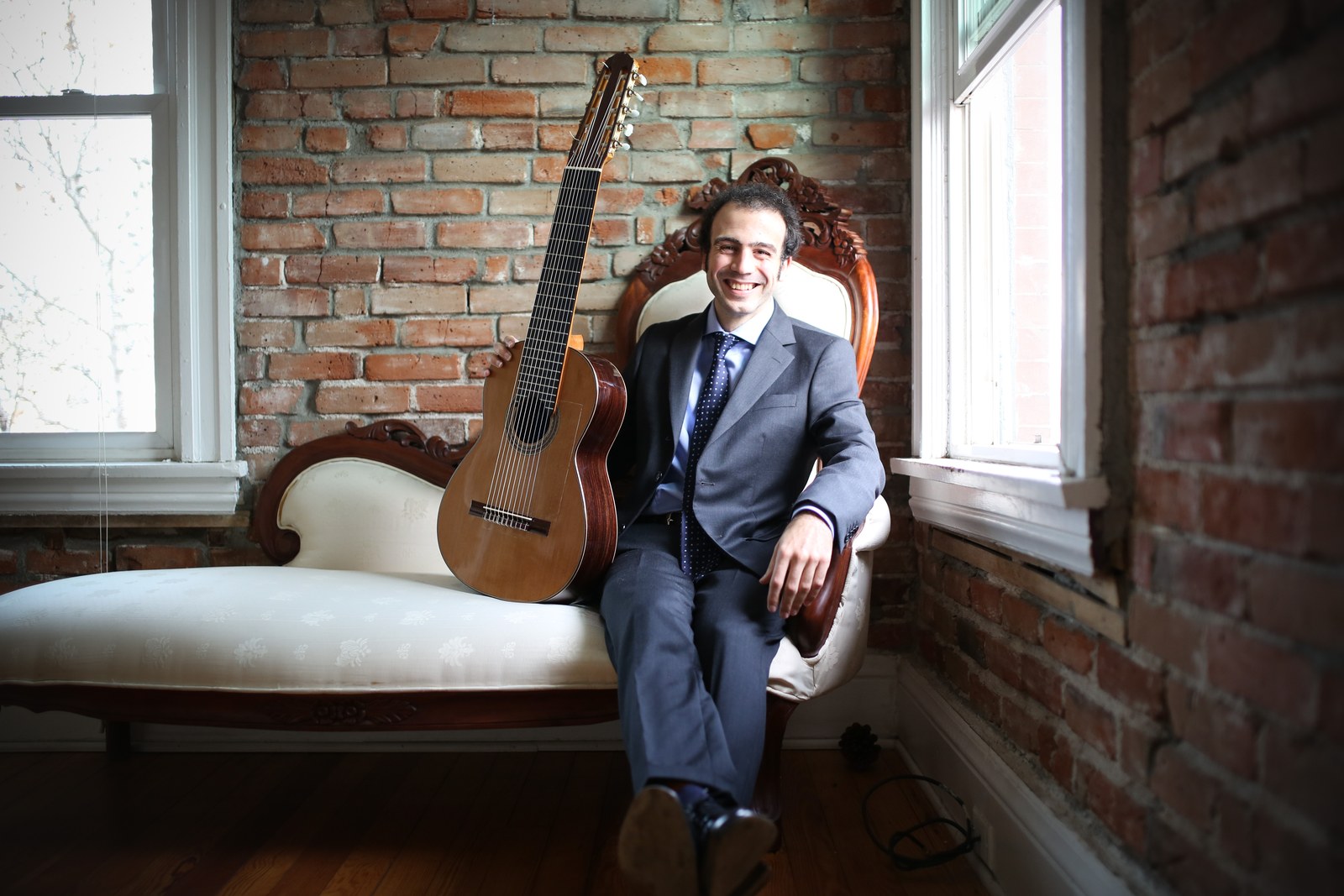
NS: First of all, I think guitar is accessible, including financially, to almost anyone. It’s a folk instrument; all songwriters in the Western world at one point just play guitar and sing.
And all kids should be playing guitar and singing songs with friends. And that’s the best use of a guitar, singing songs with friends. That’s what I used to do. Anyone can learn to play a few chords if they like singing songs and they like singing with friends. You don’t need to be a musician. You don’t need to have a family of musicians. No one is intimidated by it.
For me it was the instrument I was already kind of playing. I already had a guitar. And then a friend of mine took me to a concert in Milano, Paco de Lucía, who is arguably the greatest flamenco guitarist that ever existed. For sure one of the most influential because he really brought flamenco to every audience, everyone in world. And I mean, he walked on stage, there was a spotlight, he started playing and I just thought, oh my god, I had no idea you could play the guitar like that.
It was one of the most beautiful things I’ve ever seen. Then later I learned that… to play flamenco guitar, it’s another thing, and basically, if you don’t grow up in Andalusia, it’s very, very hard to do it, but that’s what started me; flamenco and classical guitar, despite lots of profound differences, they’re also very close to each other. That experience changed my life, and of course I did more classical guitar and not flamenco, but he’s the man that ignited that spark. I’ll never forget the moment, in the theater, what he played, how he played, how I felt.
KB: There’s a pretty profound difference between getting together with friends and singing and playing a guitar and then playing Bach on a 10-string guitar. How did you make that transition from playing with friends to being inspired by flamenco to classical guitar?
NS: Of course, when I started, I didn’t know what was going to come out of it, where it was going. I had never heard the name Bach, and I don’t know if I ever even heard anything he had composed. But I loved going to lessons and I just felt that the music and the guitar were speaking to me.
I think most parents tend to freak out a little when their child wants to be a musician, because we all know how this world works and how little musicians are paid and how poorly they’re treated, most of all in Italy. And since I started so late, it was even harder — I was about to finish high school, go to university, and then suddenly, oh, I want to play guitar. Luckily, somehow, I must have been gifted enough that I did things quickly, so my mom saw how happy it made me and how determined I was, so she still supported me, even though I can’t imagine how much she must have worried.
Commissioning Rivers
Jonathan Raabe: Can you tell us about the music that you’re going to play on these two concerts? What is your inspiration around the music that you’re choosing to play and around the music that you have commissioned?
NS: I started commissioning music when my daughter was born.
I had played with Ars Nova, the Castelnuovo-Tedesco Romancero Gitano, and it used to be the only piece you will ever play with a choir, and I love choirs, I love choral music, and I was kind of sad that there was one piece. How many times you can play always that piece? So when Julia was born, and I wanted to celebrate becoming a parent, I thought, ah, let’s commission a piece for guitar and choir. That piece is Materna, and it is by Nicola Campogrande.
I love choral music, and I wanted to expand the opportunities of playing with a choir. Because I came to guitar late in life, and much of my high school education was in classics, I’ve always been drawn to words before music, so poetry, writing, it’s always been something I love. And commissioning choral music often means being able to also commission a libretto, and so working with poets, which is what happened with that piece.
Then, when it came to Rivers, I realized it was important in commissioning a choral piece with guitar to ask someone who actually knew how to write for choir, not just guitar, because not every composer knows how to write well for choir. I decided to ask Corrado Margutti, who is a great singer and choral conductor. And he’s been living in choir since he was five years old, so he really knows how to write well for a choir.
I asked him to write a piece about immigration, because I have been very angry and upset by current attitudes toward immigrants.
What Margutti did is very beautiful. We are doing this piece, Rivers, in October. Instead of making it too obvious, he spoke about this idea I gave in a very subtle and poetic way, which maybe is more effective. He just thought, rivers, the idea of rivers, why rivers? Because there are many rivers, but they all go to one sea.
And the piece is in different languages, in the poetry, and in musical languages. Each movement comes from a different place, each movement has a different identity, but they work all together and create this piece, and that’s the idea of humanity we would like our children to live in and work for, a humanity where all the rivers come together to be brothers and sisters, because we are all humans and we all live in the same world.
There are many rivers, but they all go to one sea.
Nicolò Spera
NS: So that’s the idea behind the piece. It’s really to celebrate brotherhood, and because of that it celebrates immigrants all over the world.
JR: What you’re talking about is uniquely relevant to today, isn’t it? And it’s this idea of our entire season being cross currents and confluence with rivers and paths that need to be allowed to flow together. If you were to tell someone you know is going to be coming to the concert, is there anything you would suggest that they read, any poetry for example, to get acquainted with before either the house concert or the Rivers & Streams concert?
NS: Well, I would say to actually come unprepared because it’s musical and doesn’t need preparation, and I think that it is beautiful to just let it hit you and see what happens and then do some research after.
But if someone wants to start, I would say to maybe start with the poetry of David Maria Turoldo, who is the poet of the third movement [in the published score, Turoldo’s poem “All’ultima sera” is the second movement]. When I contacted Margutti, I wanted this poet to be in this cycle. I said, “you can do whatever you want, but we need to have one poem by Turoldo.”
David Maria Turoldo was a Catholic priest. I’m not Catholic, I’m not religious, I’m atheist. My mom is atheist. But one of her favorite poets, and one of my favorite poets is David Maria Turoldo.
He’s one of those great religious men that makes you forget that what he’s talking about has something to do with God and with religion because it’s so profoundly human. And he was an amazing human being that did so many things that every man of every religion should do and they don’t.
So read Turoldo. Not many people know of this man, most of all in the United States, but it’s fantastic.
Six strings, ten strings
KB: I think that people will be interested in the differences between a six and a 10-string guitar. Can you just talk a little bit about that?
NS: The main difference, apart from the number of strings, is that the extra strings in the 10-string vibrate sympathetically with other strings. So a lot of times the four extra strings on a 10-string make a difference without being played.
The main wonder of a 10-string guitar is that because of these extra layers of resonance, there is a shimmer to the sound, kind of like a starry night. The note shines but there is the Milky Way around it and the other strings add these clouds of sparkling sonorities around each note. The magic is what this extra layer of sounds and sonorities add. Overtones get produced because all the strings are vibrating sympathetically.
The guitarist who came up with this idea, in the 1960s, was Narciso Yepes, and he was very interested in resonance. He noticed that any string instrument has some sympathetic vibration through its strings, but that on a 6-string guitar some notes wouldn’t do almost anything — eight of the twelve notes of the chromatic scale have no natural resonance on a 6-string. So he worked with the luthier José Ramírez III to figure out how many strings, and with which tuning, would allow you to have that resonance for basically every single note of the chromatic scale.
You get more colors because of the extra resonances. So it’s a more, I would say, kaleidoscopic instrument than a 6-string. Of course, multi-string ancestors of the guitar have always been there. I mean, the baroque lute had 13 strings — and they were actually doubled, so more like 13 pairs. And a theorbo has 14 or more, with the longest ones running down an extended neck just for the bass notes.
The festival, and what he misses
KB: Tell us a bit about the guitar festival that you created at CU. It’s a festival and competition, is that correct?
NS: Well, it used to be, and it used to be every two years. But then three things happened. COVID and two children in my family.
So I just couldn’t do it anymore. Now, what I do, which I started last summer, is a little different. It’s still a festival, but I do it in the summer and there is no competition. I know that the audience loved the competition, but I don’t want to have any part in creating this culture, at least in the guitar world. Competition shapes the way people are playing the guitar and I think it’s horrible. So I don’t want to be part of that culture.
Now I do a festival in the summer with concerts for the community. People come, students come. We learn together, we play together, but we’re not competing. And now we do it every year, toward the end of May, beginning of June. And it’s free and open to the public. I try to also bring people that normally wouldn’t be available to my students. And that can bring a very different perspective on what it means to play music and to be a musician.
KB: What do you miss about living in Italy?
NS: The only thing I don’t miss is playing concerts in Italy. Musicians are still not treated very well there. The lack of respect is unbearable.
That said, I would still want to go back. I mean, I’ve been trying to go back because I want to raise my children there, not here.
I miss everything else. I miss my mom. I miss my friends. I miss the way people are together. So, I want to go back tomorrow, but I can’t.
KB: We are so glad you are here, Nicolò! And grateful for the opportunities to make music with you. Thank you so much for taking the time to chat with us today!
NS: I know you have a million other things to do, but it’s lovely to catch up with you anyway, and I can’t wait to play together again.
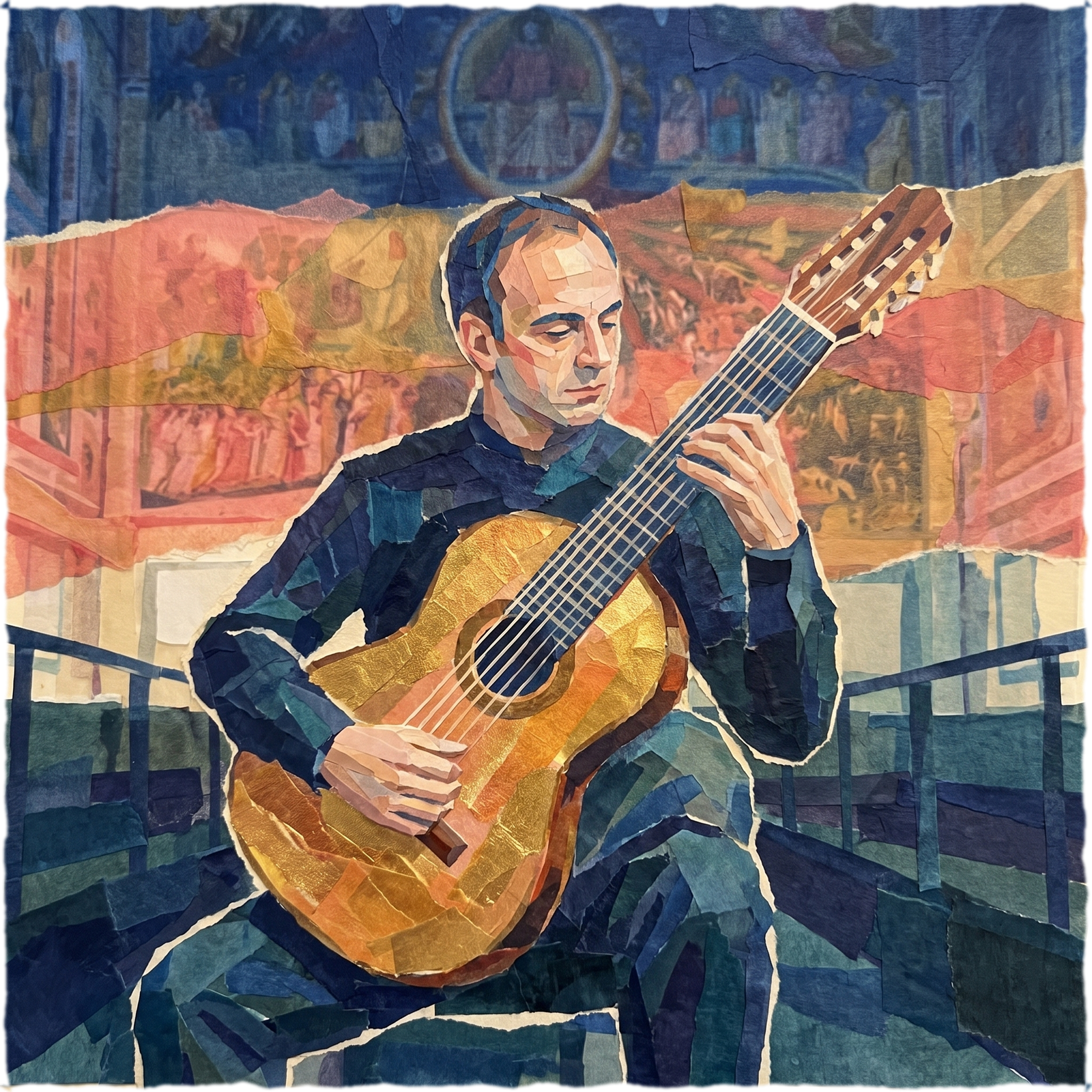
Nicolò Spera plays a solo recital for Ars Nova Singers at an intimate house concert on Saturday, September 12 at 5:00 pm; and joins the choir as guest artist on October 9, 10, and 11 for our opening concert, Rivers & Streams, featuring the work he commissioned of the same name, Rivers, by Corrado Margutti.
Frequently Asked Questions
When can I hear Nicolò Spera with Ars Nova Singers?
Twice this fall. He plays a solo recital at an intimate house concert on Saturday, September 12, where seating is strictly limited; and he returns as guest artist for Rivers & Streams on October 9, 10, and 11 in Boulder, Denver, and Longmont. Full details are on our season page.
What is Rivers?
A large-scale work for choir and guitar by the Italian composer Corrado Margutti, commissioned by Nicolò Spera. Its movements draw on poetry in several languages, and it takes migration and belonging as its subject — many rivers running to one sea. It shares the October program with Castelnuovo-Tedesco’s Romancero Gitano, the piece Spera first performed with Ars Nova.
Should I read anything before the concert?
Spera’s own advice is to come unprepared and let the music reach you. But if you would like a way in, he recommends the poetry of David Maria Turoldo, the Italian priest and poet whose poem “All’ultima sera” is the second movement of Rivers.
What is a ten-string guitar?
A classical guitar with four additional strings, conceived by the Spanish guitarist Narciso Yepes in 1963 and first built by the luthier José Ramírez III. The extra strings are usually not played at all. They are tuned to vibrate in sympathy with the notes that a standard six-string leaves unresonated, giving every note in the chromatic scale a halo of overtones.