
Spem in alium: Written to celebrate Queen Elizabeth I
By Andrea Weidemann
 This article first appeared in 2024. Ars Nova Singers Communications Coordinator Andrea Weidemann originally prepared it to give further insight into this stunning work.
We have shared a lot in the past about the musical centerpiece on our upcoming program, Spem in alium – not only because it is such a logistically intriguing *motet, but because it is considered to be one of the finest pieces of English choral music ever written. Composed by the impressive figure Thomas Tallis, Spem in alium’s novel trait is its forty different vocal lines, something so groundbreaking that its measures still resound nearly five hundred years later. Ars Nova Singers undertakes this challenging masterpiece with one singer to each part.
How does a singer approach learning and performing something so ingenious?
How can an audience member interpret such a rich tapestry of aural experience?
Imagine yourself transported to the past, looking up to the vaulted domes of an English cathedral, your ears taking in authentic “surround sound” from just echo and resonance alone as vocal lines soar in, out, and around each other. This is medieval audio engineering that would have made a lasting impression on anyone that heard it.
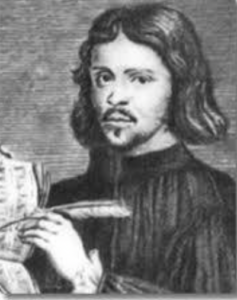
Some quick historical context: Thomas Tallis lived to be an old man of age eighty, longer than the typical lifespan in 1500s England, and his career as a musician in the Royal Court spanned the rules of four monarchs. There is not much recorded history determining whether Spem in alium was performed in Tallis’s lifetime, but historians believe that the piece was written for eight separate choirs, with the intention that they would all meet together to sing for the birthday of Queen Elizabeth I.
Part of the beauty of learning how to perform Spem in alium with Ars Nova Singers is completing its musical puzzle. Choir members listen in all directions to fulfill their role in the *counterpoint, while each voice enters exactly in rhythm as melodic themes cycle. It can certainly be challenging to hold your own while singing in forty parts: in their slow and steady rhythm, forty solo lines can instill a “needle-in-a-haystack” feeling. Yet with every rehearsal, the piece comes more and more to life, as each individual feels the music steadily morph into different colors and intensities. Tom’s reminder to be “gently relentless” keeps the choir moving as a homogeneous entity, motivated to create beauty in every word, phrase, and dynamic level.
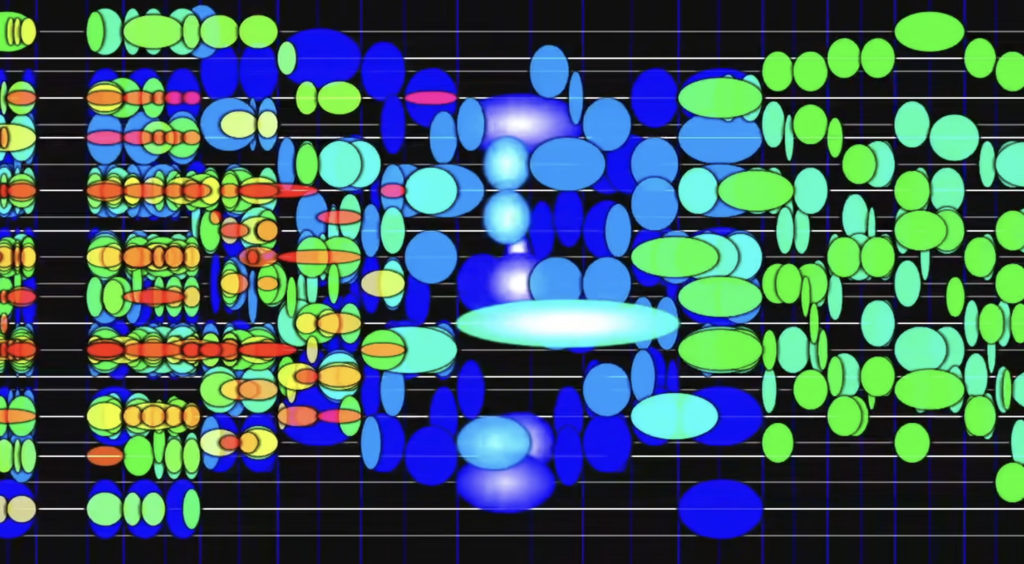
Each singer’s line is melodically simple, yet its contrapuntal weaving with the other voices was the careful theoretical, even mathematically complex, placement by Tallis. In its large-scale presentation of themes, it shows hints of *minimalism, and its dramatic shifts and pauses feel almost operatic. So, in such complexity, how can one bend the ear to take all of it in? The gradual ebb and flow of this piece, as well as its grand pauses, are best interpreted as changing shapes, lines, and gradients of color, to express a deeper, more personal meaning for the listener.
VintageRuby – Queen Elizabeth I: Words and Music explores the historical and musical importance of this work through the eyes of Elizabeth herself – inside the world of Elizabethan England, where music was power, art was politics, and a woman ruled with brilliance and steel. In VINTAGERuby, Ars Nova shares the stage with actor Tamara Meneghini to bring Queen Elizabeth I to life. In its interplay between soaring polyphony and regal words, VINTAGERuby creates a touching portrait of a queen both feared and loved.
Translation:
Spem in alium nunquam habui praeter in te
Deus Israel
qui irasceris
et propitius eris
et omnia peccata hominum in tribulatione dimittis
Domine Deus
Creator coeli et terrae
respice humilitatem nostram
I have never put my hope in any other but in You,
O God of Israel
who can show both anger
and graciousness,
and who absolves all the sins of suffering man
Lord God,
Creator of Heaven and Earth
be mindful of our lowliness
Glossary: (from brittannica.com)
*Counterpoint: art of combining different melodic lines in a musical composition. It is among the characteristic elements of Western musical practice.
*Motet: style of vocal composition that has undergone numerous transformations through many centuries. Typically, it is a Latin religious choral composition, yet it can be a secular composition or a work for soloist(s) and instrumental accompaniment, in any language, with or without a choir.
*Minimalism: In both music and the visual arts, Minimalism was an attempt to explore the essential elements of an art form.
Check out this YouTube recording of Spem in alium to get a visual sense of the complexity of this beautiful work.