
Posted February 6, 2026
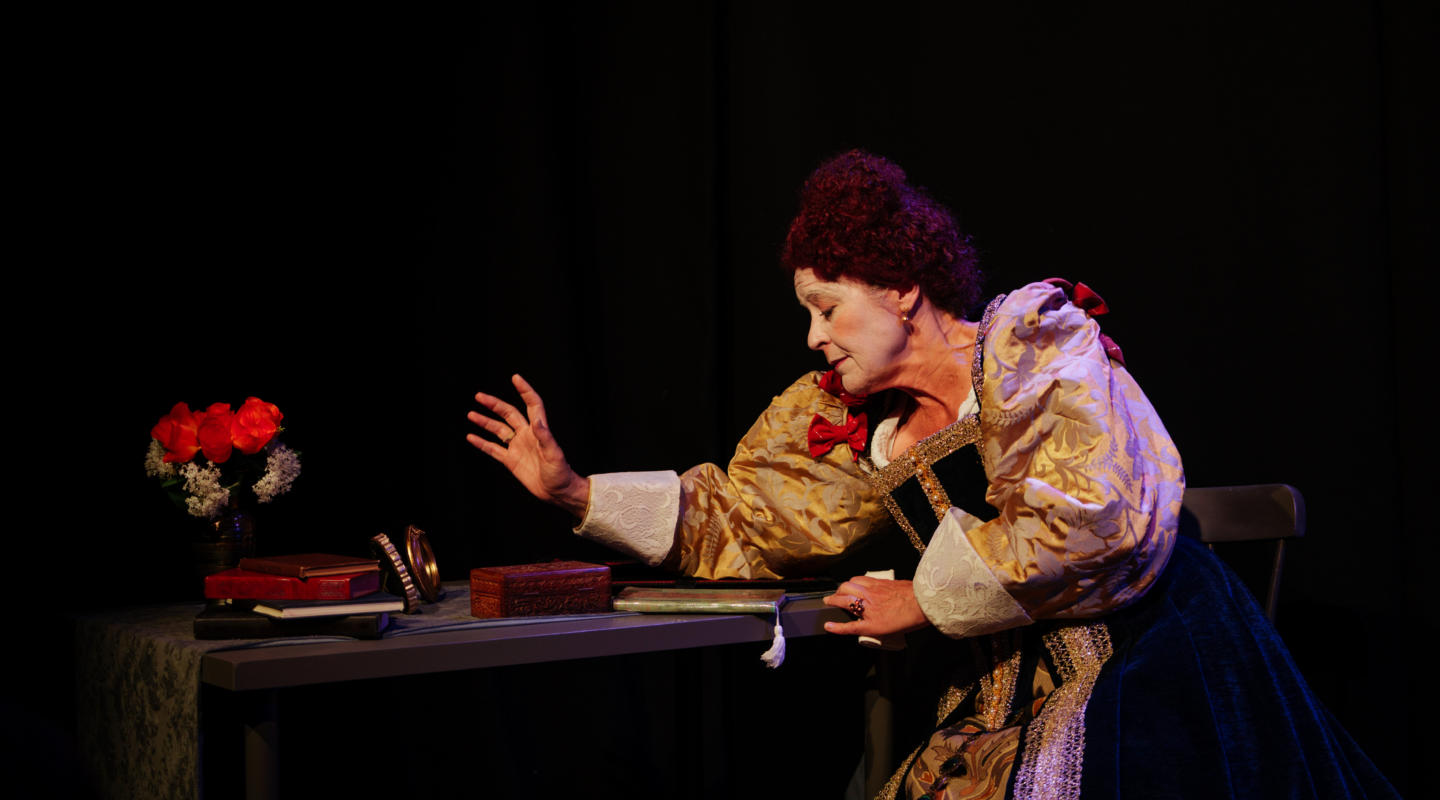
An interview with actor Tamara Meneghini, who portrays Queen Elizabeth I with Ars Nova Singers in VINTAGERuby – Elizabeth I: Words and Music.
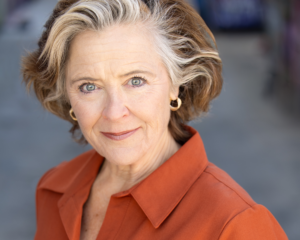
Actor and teaching artist Tamara Meneghini brings Queen Elizabeth I vividly to life in Elizabeth I: In Her Own Words, a solo theatrical work grounded in historical documentation and the scholarship of renowned historian Carol Levin.
Meneghini’s fascination with Elizabeth began in graduate school through “period style salons”—research-driven, costumed improvisations set in historic eras. Years later, her collaboration with Levin deepened into a long-term creative partnership, shaping a script drawn from letters, speeches, and firsthand accounts that reveal the human being behind the portraits.
For this Ars Nova Singers collaboration, Elizabeth’s story is interwoven with the choral music she loved—especially works connected to Thomas Tallis and William Byrd. Meneghini notes that this is not simply theater placed beside music: the repertoire adds new historical insight and emotional dimension, including moments that highlight Elizabeth’s real support of composers at her court.
Executive Director Kim Brody had a chance to sit down with Tamara Meneghini and discuss the upcoming production of VINTAGERuby – Elizabeth I: Words and Music, which is adapted from Meneghini’s one-woman show Elizabeth I: In Her Own Words.
Kim Brody: First of all, we’re so excited about this collaboration. When the idea first came up, Tom (Morgan) and I agreed it would be “very cool,” and it’s evolved from there. What made you interested in working with Ars Nova Singers?
Tamara Meneghini: I love collaborating, and I love creating theatrical work that tells stories in different ways. Because I know Elizabeth and her time period so well – the Tudors, the Renaissance, court culture – it immediately felt like a project that made sense.
I’ve also attended Ars Nova concerts and really enjoyed them. I love this music, and Elizabeth loved music too. It was central to her life. She played the virginal, she sang, and music gave her solace. So, the idea of telling a compelling story about both the monarch and the music that surrounded her felt like a natural fit.
KB: You clearly know Elizabeth and her world incredibly well. How did that begin? Was this something you studied?
TM: Yes. I teach a class called Playing with Style, which explores acting styles in relationship to historical periods. One of the periods I’ve always been most drawn to is Elizabeth’s court.
In graduate school, we created projects called “period style salons.” We were assigned characters from a specific historical period and immersed ourselves in the research, learning about the politics, the culture, the music, and the dances. We wore period costumes and participated in structured improvisations as if we were actually in Elizabeth’s court.

When I finished grad school, I realized how much I loved that work. I went on to study with Lloyd Williamson in New York, who developed those exercises. We did Elizabethan, Victorian, and Edwardian salons, and I always returned to the Elizabethan one; it was by far my favorite.
KB: How did that evolve into Elizabeth I: In Her Own Words?
TM: When I was living in Lincoln, Nebraska, I connected with Carol Levin, one of the most respected Elizabeth I scholars. We collaborated on an Elizabethan salon project with an early music consort – crumhorns, sackbuts, period instruments – and it was incredibly successful.
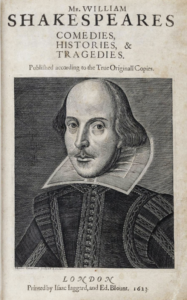
Years later, after I moved to Colorado, I was invited to create a piece to accompany the touring exhibition of Shakespeare’s First Folio at CU. That sparked my curiosity about the relationship between Shakespeare and Elizabeth, how they influenced one another.
I reached out to Carol, and she created a first-person piece in Elizabeth’s voice. That became the foundation of the work. It started as a shorter piece, then became a solo work, and eventually grew into a full-length play. It’s been evolving for many years, always grounded in scholarship and collaboration.
KB: And now Ars Nova has asked you to cut it back again.
TM: Yes, exactly! But that evolution is part of the process. What keeps the work alive is that I’m always learning something new.
Even in this Ars Nova collaboration, I discovered things I didn’t know before. About the Duke of Norfolk, for example, and his relationship to Elizabeth. There are always new details, new connections, and that’s part of what makes Elizabeth endlessly fascinating.
KB: When we performed Tallis’s Spem in alium a few years ago, one of our singers discovered that it may have been written for Elizabeth’s birthday. Was that something you were aware of?
TM: No, I didn’t know that. I knew about the competitive spirit behind the piece, the sense of musical one-upmanship, and how specific Tallis was about how it should be performed.
When I was at the Newberry Library in Chicago, I saw documents related to Elizabeth’s patent for Thomas Tallis and William Byrd. A scholar from Northwestern helped me locate materials that showed just how highly Elizabeth regarded them.
That made me think about how meaningful this collaboration could be. These moments aren’t just theater layered onto music. The musical choices actually deepen the story.
KB: Can you explain what you mean by a “patent”?
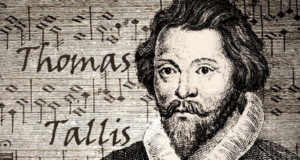
TM: As I understand it, Elizabeth granted Tallis and Byrd exclusive rights as court composers. They were always the first choice for music at court, and the patent also ensured that they, and even their families, would be paid for their work.
We include an abbreviated version of that language in this performance. It clarifies how personally invested Elizabeth was in these composers and how important music was to her reign.
KB: You took Elizabeth I: In Her Own Words to the Edinburgh Fringe Festival. What was that experience like?
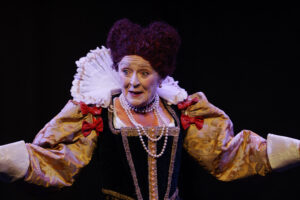
TM: It was exhilarating and exhausting in the best way. I’ve done the Fringe twice. The first time didn’t go especially well, but it taught me an important lesson: when you’re working with history, context matters.
At Edinburgh, many audience members are from Scotland or England, and they’re deeply familiar with this history. I was nervous bringing Elizabeth into Scotland — Mary Queen of Scots’ territory — especially since Elizabeth signed Mary’s death warrant. I honestly thought the audience might resist the piece.
Instead, something really powerful happened.
KB: What kind of response did you receive?
TM: Every performance sold out. People came up afterward and said, “I had no idea. I need to learn more about her.” That’s always the response that means the most to me.
The audience didn’t just see Elizabeth as a monarch making ruthless decisions — they saw her as a person navigating impossible choices. That shift in perspective is exactly why I make theater.
KB: Where was the piece performed?
TM: We performed at Surgeons’ Hall, which is part of the University of Edinburgh. It was a small venue — about 50 seats — but it was a true theater space within the larger Fringe complex.
Like most Fringe productions, the logistics were intense. There was no dressing room, no air conditioning, and very little time between shows. My dresser was also my stage manager, and we’d sometimes find an open bathroom to get into costume. I had to arrive early just to find a quiet hallway to warm up and focus.
KB: That sounds intense, but also rewarding.
TM: Absolutely. It’s a little insane, but it’s also thrilling. When the show ended, we had just minutes to clear the stage for the next performance. But the energy from the audience made it worth it every single time.
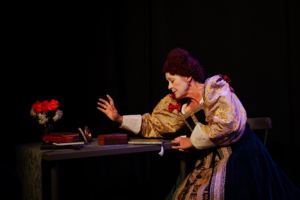
The reviews were very strong, and word spread quickly. Performances sold out day after day. For me, that experience affirmed the power of the piece, that even in a place where people think they already know this history, there’s room for a deeper, more human story.
That’s what I hope for with this Ars Nova collaboration as well — that the music and the storytelling together open up new ways of seeing Elizabeth, not just as an icon, but as a human being.
KB: What sources shape your portrayal of Elizabeth?
TM: Primarily letters – Elizabeth’s letters and letters written to her – along with Carol Levin’s research. The play is called Elizabeth I: In Her Own Words because so much of the text comes directly from her writings.
We also use Shakespeare selectively to heighten pivotal moments, but the heart of the work comes from Elizabeth herself: her speeches, her letters, and the accounts of those who lived around her. Carol has written and edited numerous books and collections on Elizabeth, and her scholarship grounds everything.
KB: Was Elizabeth truly beloved?
TM: Early in her reign, very much so. Later, less so. Many of the people who had served her faithfully died, and the court shifted to younger figures who didn’t share the same values. By the end of her life, she felt increasingly isolated.
One of the things that moved me most was learning that she was afraid to sleep near the end of her life because she wasn’t ready to die. She stayed awake, reading or standing, surrounded by her ladies. She wanted the people closest to her to know how deeply she loved them and that she made her choices for England, even when they were difficult or imperfect.
As an actor, that question is powerful: what do we want people to know at the end of our lives?
KB: Much of what people assume about Elizabeth is drawn from many official portraits of her throughout her life. But those were designed to present a “perfect” picture of her. It sounds like part of what drew you to Elizabeth was uncovering what’s beneath the portraits.
TM: Exactly. The portraits are staged, propaganda, really. I’m drawn to women who are perceived one way publicly but lived complicated inner lives.
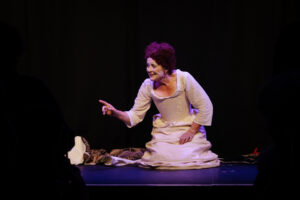
Elizabeth lost her mother as a child, learned her mother had been executed by her father, and grew up navigating constant danger. That humanity is what I want audiences to see. The greatest compliment I hear is, “I had no idea.”
KB: Do you bring parts of yourself into the role?
TM: Absolutely. Elizabeth was often the only woman in rooms full of men, and even though she was queen, the male voice still carried more authority. That power struggle feels very contemporary.
It’s also why she never married. Marriage would have stripped her of power and reduced her to a body meant to produce heirs. She understood that clearly, and I think that awareness resonates strongly today.
KB: How is your play, this version of it, enhanced by Ars Nova Singers?
TM: The choral sound changes everything. I usually perform with a guitarist, but voices bring a communal, expansive quality. Additions like the psalter of Archbishop Matthew Parker, who served both Anne Boleyn and Elizabeth, create meaningful connections between Elizabeth, her mother, and the music itself.
This really has become its own production, another evolution of the work.
KB: What would you like audiences to know before they attend?
TM: They don’t need to prepare; curiosity is enough. You’re in Elizabeth’s inner chamber as she prepares for bed, reflecting on her life. She needs to be heard, understood, and loved.
That’s the moment we’re inviting the audience into.
Photo credits: Elizabeth Blumenfield
Tamara’s son Henry Stalker made this documentary about Elizabeth I: In Her Own Words